
Lectures
You can download the lectures here. We will try to upload lectures prior to their corresponding classes. Initial versions of the slides (from previous years) may be updated the days preceding the lecture.
-
-
 Lecture 2 - Data challenges
tl;dr: Common challenges in data collection.
[slides]
Suggested Readings:
- Lessons from measurement [only need to read measurement section]
- When You Hear the Margin of Error Is Plus or Minus 3 Percent, Think 7 Instead
-
-
 Lecture 4 - Other aspects of data collection
tl;dr: Other topics in data collection, with a shortened weighting wrap-up.
[slides]
Note: Includes a shortened wrap-up of weighting.
-
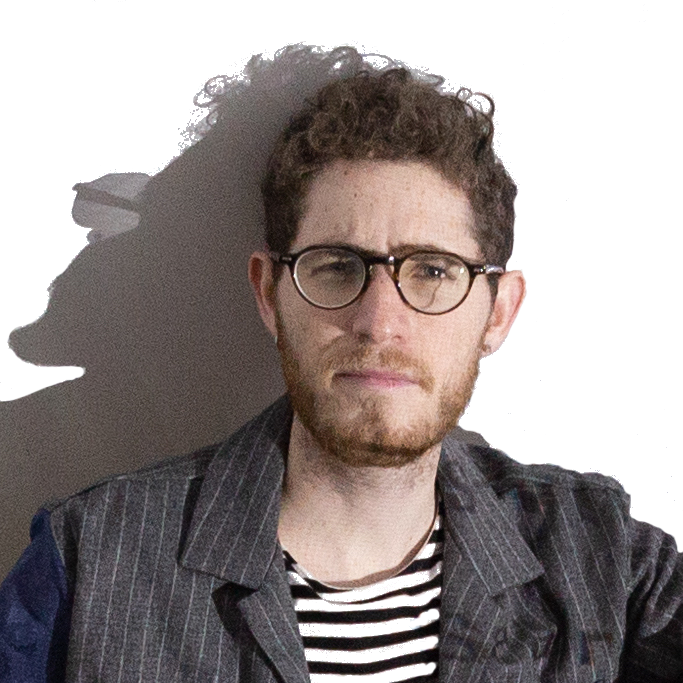 Guest Lecture -- Ziv Epstein
tl;dr: Ziv Epstein (MIT).
Title: Art, Randomness and Creativity in the Age of AI
Abstract: AI tools have the potential to transform creative production by allowing for the rapid and efficient creation of media with little human input. This use of AI tools also poses a serious social dilemma: while individuals can use these models to increase their efficiency, this comes at the cost of collective diversity and divergence (homogenization). Moreover, the integration of AI into creative workflow introduces a range of challenges for attribution, authorship and creative agency. In this talk, I will highlight three potential directions for responding to these challenges. First, I will discuss experiments on who gets credit for AI-generated art and make the claim that AI is a tool that humans use to make art. Next, I will discuss the role of social cues and popularity in the perceptions of aesthetics. Finally, I will discuss the role of randomness in creativity and report findings on how injected randomness could serve to de-homogenize AI-assisted creativity. Together, this work offers some directions for how culture can hope to metabolize AI during a moment of technological explosion.
-
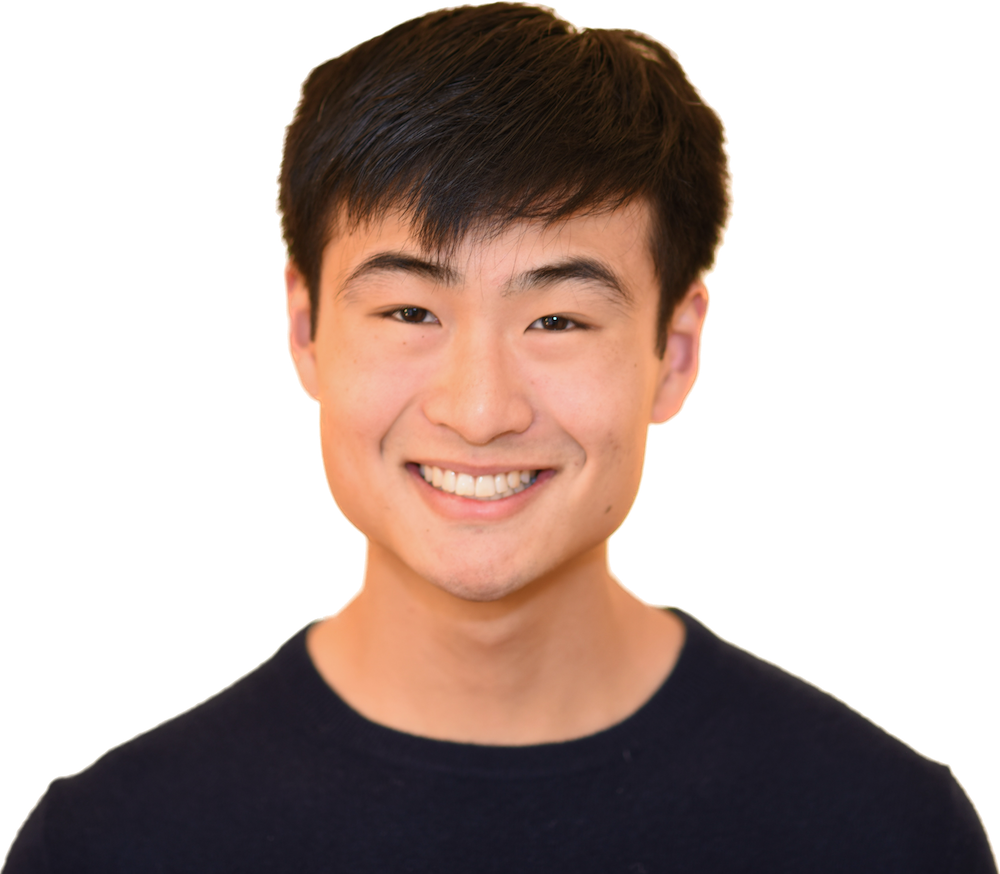 Guest Lecture -- Kenny Peng
tl;dr: Kenny Peng (Cornell Tech).
Title: AI Beyond Generation
Abstract: Given the remarkable capabilities of generative AI, why don’t we understand the world better? I argue that one reason is that we use AI models too much like humans (e.g., agents), and not enough like computers. I introduce conceptual computing, a paradigm that combines the strengths of generative AI and classical computing by treating the internal abstractions of language models as the units of computation. I’ll show how this approach is enabled through a scientific theory of AI representations.
Conceptual computing can efficiently answer questions like “what concepts predict effective teaching?” or “how does the media cover in- and out-group politicians?” I’ll also show how conceptual computing can be used to organize massive collections of information, such as on social media. Conceptual computing enables new uses of AI, while also focusing on how AI can complement humans rather than replace them.
-
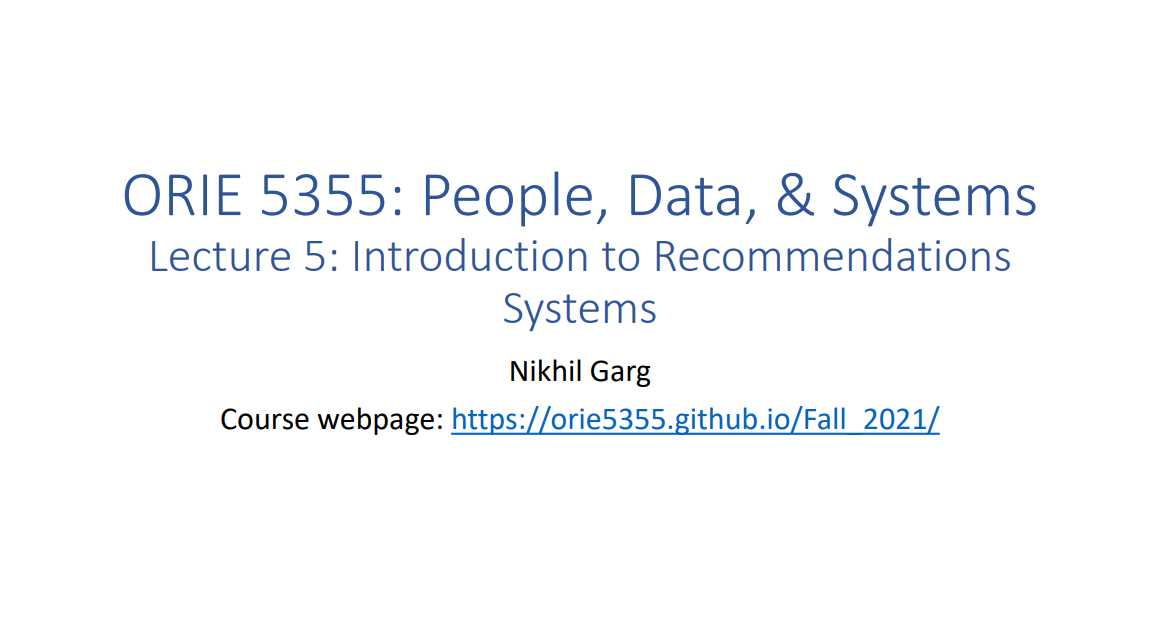 Lecture 5 - Recommendations introduction
tl;dr: Introduction to Recommendations, including data challenges and collaborative filtering
[slides]
Suggested Readings:
-
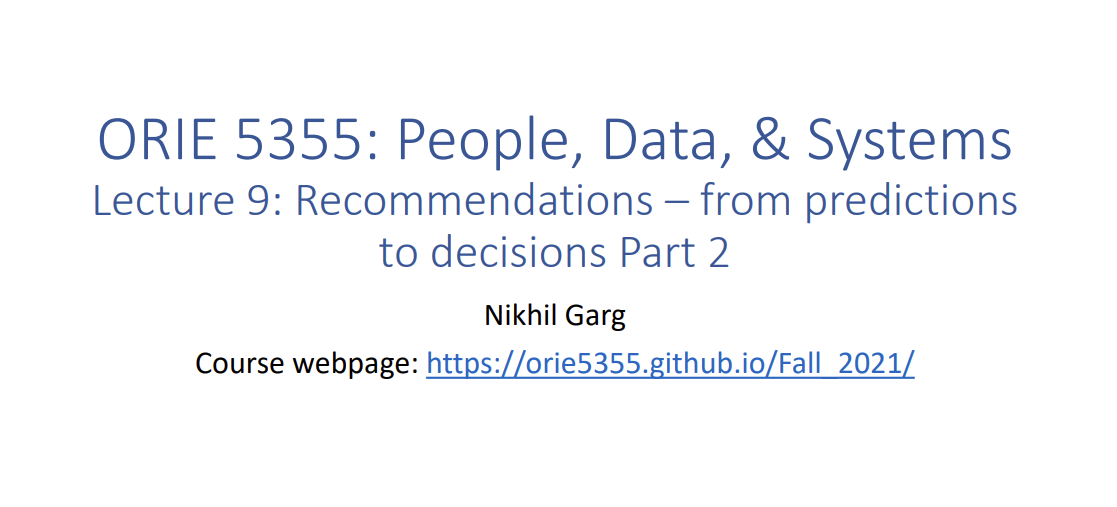 Lecture 6 - Recommendations, from predictions to decisions
tl;dr: From predicting ratings to making decisions: capacity constraints and multi-sided recommendations
[slides]
-
 Guest Lecture -- Vince Bartle
tl;dr: Vince Bartle (placing.ai).
Note: this will be a virtual guest lecture
Title: TBD
Abstract: TBD